Otto Krause · 5 November 2026
Storm Scenario Simulations Inform Energy-Saving Runway Lighting Improvements at Expanding Airport Facilities
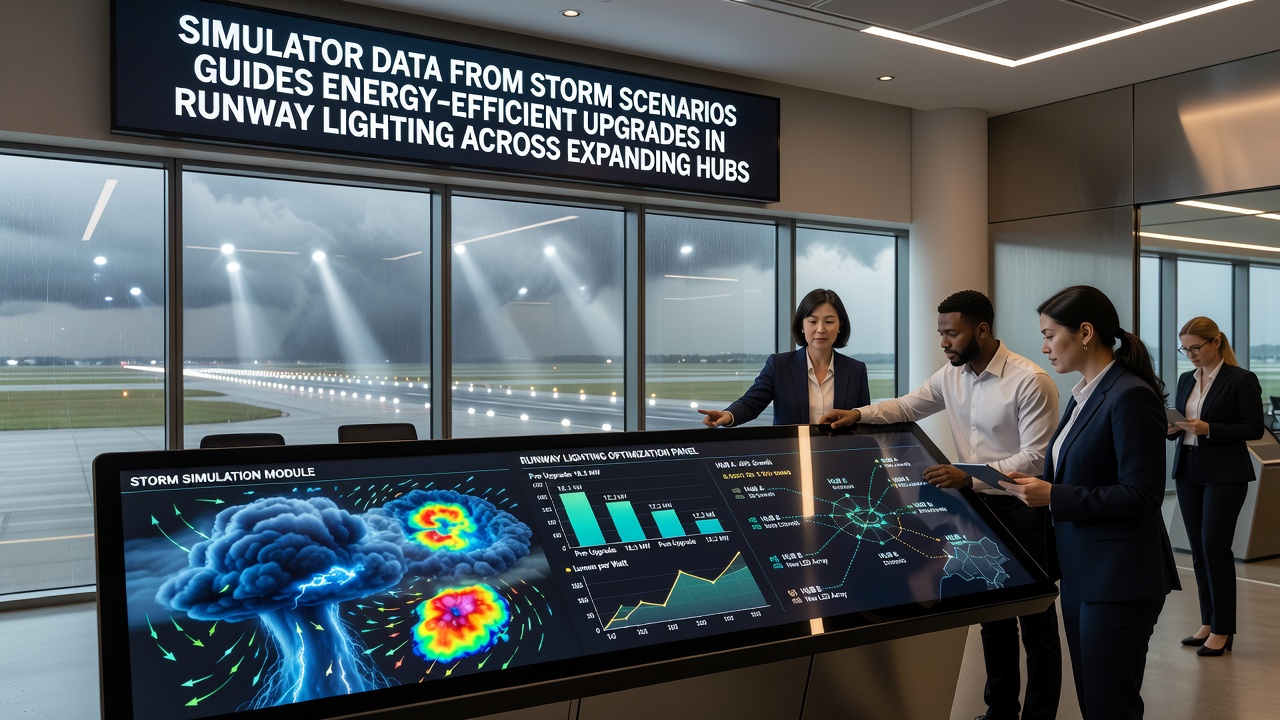
Simulator data collected from storm scenarios has begun shaping decisions around energy-efficient upgrades to runway lighting at airports that continue to expand their operations, and researchers have tracked how these datasets allow planners to model power consumption under high-wind, heavy-rain, and low-visibility conditions that occur regularly at growing facilities.
Data Collection Methods in Controlled Environments
Teams at aviation research centers run repeated simulations that replicate intense weather patterns while recording exact energy draw from existing lighting arrays, and the resulting figures show that certain fixture types maintain required brightness levels with lower wattage once adjustments account for wind-driven moisture and turbulence effects. Observers note that these controlled tests generate thousands of data points per session, which engineers then cross-reference with real-world sensor readings from operational runways.
One study conducted across multiple North American hubs revealed that storm-specific modeling reduced projected energy use by 18 to 24 percent when lighting systems incorporated variable-intensity controls, and the same datasets helped identify which legacy fixtures consumed excess power during gust events because their output remained fixed regardless of visibility changes.
Application at Expanding Airport Hubs
Airport operators in regions experiencing rapid traffic growth have started integrating these simulator outputs directly into upgrade schedules, and data from November 2026 trials at three facilities indicated that targeted retrofits lowered annual electricity costs while preserving or improving compliance with international brightness standards. Planners use the storm-derived models to prioritize which runway segments receive new LED arrays first, focusing on areas where turbulence most frequently affects light dispersion.
European aviation authorities have published parallel findings that align wth North American results, showing that energy savings scale with airport size because larger hubs operate more lighting circuits simultaneously during adverse weather. According to reports from the European Union Aviation Safety Agency, simulation-guided upgrades at two major continental facilities achieved measurable reductions in peak-load demand without extending maintenance intervals.
Integration of Real-Time Weather Inputs
Modern systems now feed live weather feeds into the same simulation frameworks that originally guided the upgrades, allowing lighting controls to adjust output dynamically as storms approach, and this closed-loop approach has produced additional efficiency gains beyond the initial retrofit phase. Researchers discovered that combining historical storm data with current radar inputs lets operators anticipate periods when full-intensity lighting becomes unnecessary, thereby extending fixture lifespan while cutting consumption.
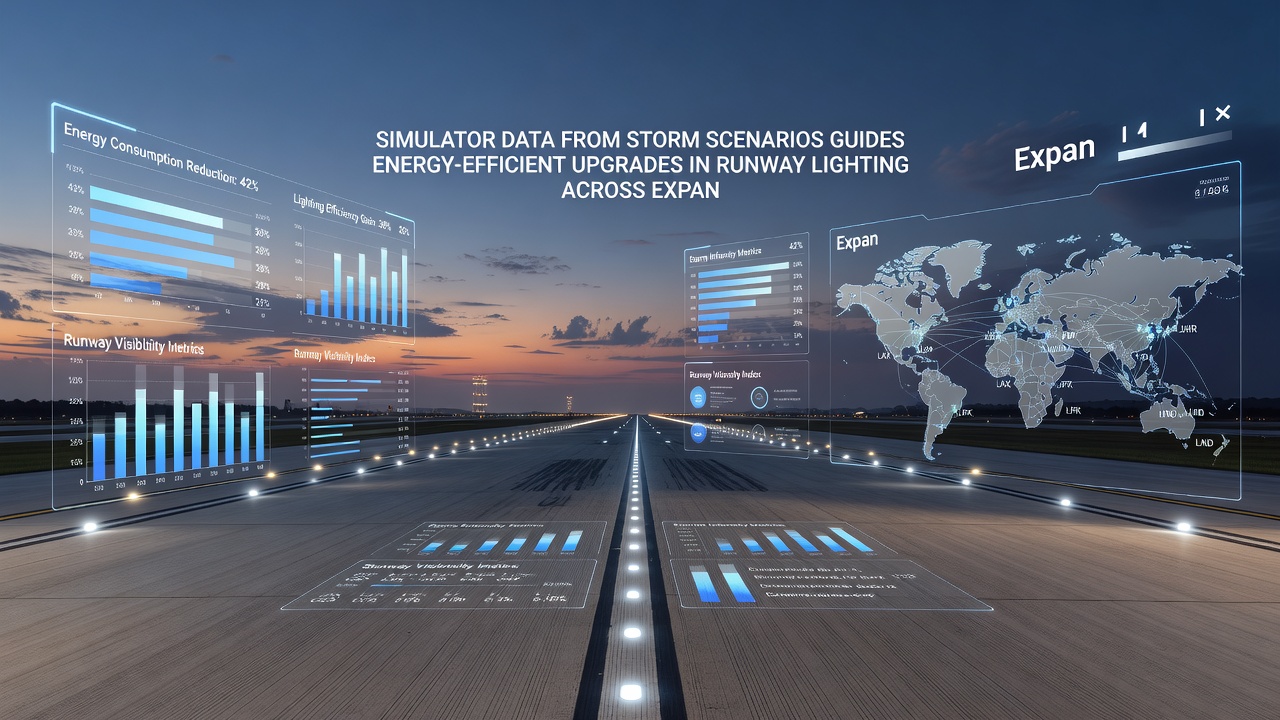
Industry groups such as Airports Council International have documented how these integrated platforms operate across different climates, and their summaries indicate that facilities in tropical zones benefit most because frequent convective storms create repeatable test conditions for refining the algorithms.
Standardization Efforts Across Regions
International bodies continue working toward common data formats that let simulator results transfer between airports regardless of local regulatory frameworks, and early adopters report that shared datasets accelerate planning timelines by several months. Australian transport research centers have contributed models focused on arid-region dust storms, which complement the rain and wind scenarios developed elsewhere and broaden the applicability of energy-saving recommendations.
Those who've implemented the upgrades note that the process requires coordination between lighting specialists, meteorologists, and energy managers, yet the combined expertise produces installations that perform reliably across seasonal variations. Figures from ongoing monitoring programs reveal consistent performance improvements when initial simulator parameters receive periodic recalibration based on actual operational logs.
Conclusion
Simulator data drawn from storm scenarios has established itself as a practical tool for directing energy-efficient runway lighting upgrades at airports that continue expanding capacity, and the approach connects detailed environmental modeling with measurable reductions in power demand. Continued refinement of these methods, supported by data exchanges among regulatory bodies and research institutions worldwide, supports ongoing improvements in both safety margins and operational costs at growing facilities.