
Theo Werner · 8 October 2026
Runway Lighting Energy Challenges at Expanding Airports
Airport operators worldwide face mounting pressure to expand runway capacity while cutting the substantial energy demands that come with traditional lighting setups, and data from multiple aviation authorities shows these systems can account for up to 30 percent of an airport's total electricity use during peak operations. Researchers have tracked how high-intensity discharge lamps in older installations consume far more power than newer alternatives, creating a clear tension between growth targets and emission reduction commitments at busy hubs.
Expansion Pressures on Energy Use
Growing passenger volumes push facilities to add longer runways and parallel taxiways, which in turn requires additional lighting fixtures that draw continuous power, yet studies from transport departments in Canada and Australia reveal many sites still rely on legacy systems that operate at 70 to 80 percent efficiency at best. Those who've examined operational logs at mid-sized airports note that each new approach lighting array adds roughly 15 kilowatts of constant load, compounding the footprint when multiple extensions occur simultaneously. By October 2026 several facilities plan to release updated consumption figures that will clarify how recent infrastructure projects have altered baseline demands.
Observers point out that safety standards mandate specific brightness levels during low-visibility conditions, so operators cannot simply reduce output without risking compliance issues, while data indicates that older setups waste significant energy through heat loss and frequent bulb replacements. One case at a European regional airport demonstrated that retrofitting a single runway with modern units lowered annual consumption by nearly 40 percent without any drop in visibility metrics.
Technology Shifts and Measured Outcomes
LED replacements have become the primary route for lowering energy footprints because they deliver equivalent illumination at a fraction of the wattage, and figures from industry reports confirm payback periods often fall under five years when paired with smart controls that dim lights during off-peak hours. Airports in Asia and the Middle East have documented similar gains after installing solar-augmented systems that feed runway circuits directly from on-site panels during daylight operations.
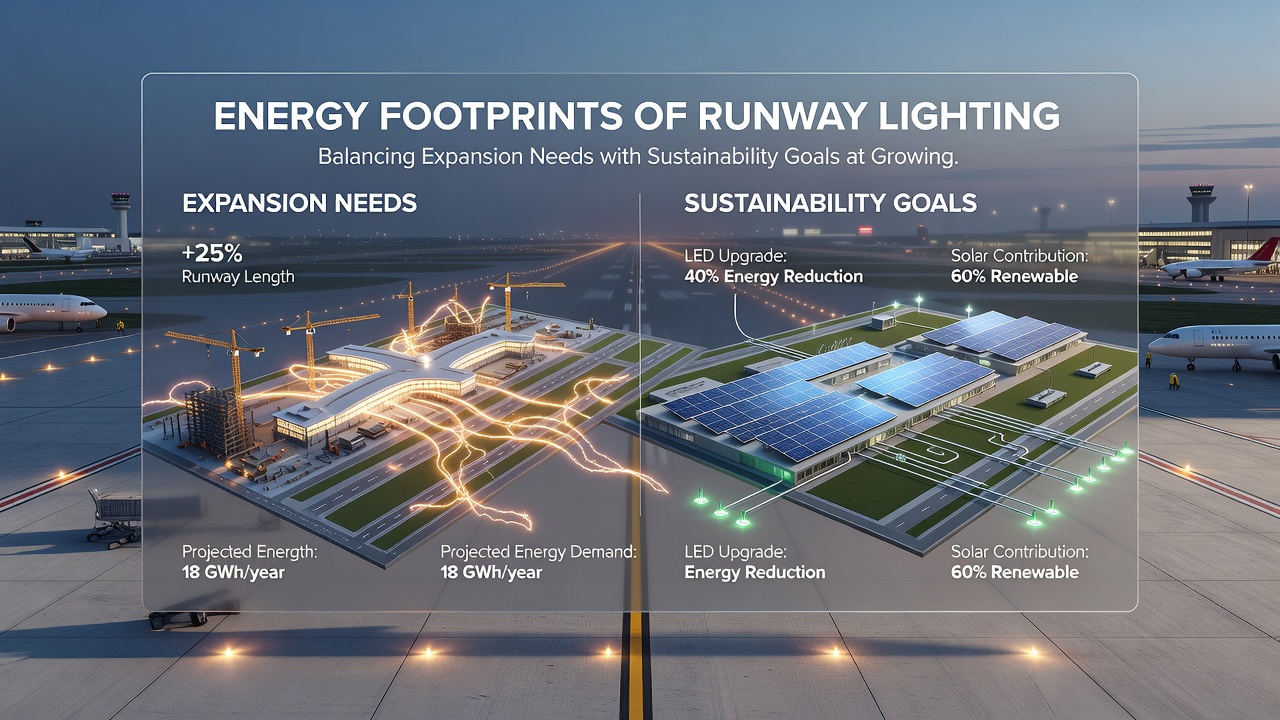
Those tracking pilot programs report that adaptive systems using sensors can cut nighttime energy draw by another 25 percent on average, although initial capital outlays remain a barrier for smaller operators. Research published through academic channels highlights how integrated monitoring software now allows real-time adjustments based on aircraft schedules, turning what used to be static power loads into variable ones that respond directly to traffic patterns.
Policy Frameworks Guiding Progress
International bodies such as the International Civil Aviation Organization have outlined targets for carbon-neutral growth that directly influence lighting choices, while regional regulators in North America and Europe require environmental impact assessments before approving runway extensions. These rules push planners to include energy modeling from the outset rather than treating lighting as an afterthought.
Analysts examining project timelines find that facilities incorporating sustainability metrics early in design phases achieve better alignment between expansion goals and emission caps, and data shows collaborative procurement of efficient fixtures across multiple airports can reduce unit costs by 15 to 20 percent. What's notable is how some operators now bundle lighting upgrades with renewable energy contracts to offset remaining consumption.
Conclusion
Balancing runway growth with reduced energy footprints requires coordinated upgrades, policy support, and ongoing measurement, since available evidence indicates that LED conversions combined with solar integration and smart controls deliver measurable reductions without compromising safety standards. Continued tracking through 2026 and beyond will show whether current strategies scale effectively as traffic volumes recover and expand at major facilities.